Why the orangutans sometimes don't show up
Updated Sept 2026 details verified
The platform serves the most boring meal in Borneo, on purpose, and the forest around it runs on a feast-and-famine calendar older than the centre. Put those two facts together and the empty-platform day explains itself — and turns into good news.
Fact one: the menu is designed to lose
Milk and bananas. Today, tomorrow, every day since 1964.
That's not a budget constraint. It's the centre's core mechanism. A rehabilitating orangutan needs a safety net — reliable calories while it masters foraging — but a safety net that's too comfortable becomes a hammock. So the platform offers nutrition without temptation: adequate, dependable, and dull as a hospital canteen. The moment an orangutan can do better in the trees, it does.
Zoos feed to attract. Sepilok feeds to be outgrown. Once you see that inversion, the whole centre makes sense.
Fact two: the forest runs on feast and famine
Borneo's great dipterocarp forests do something almost nowhere else on Earth does at this scale: mast fruiting. For long stretches the canopy is stingy — then, on an irregular cycle, vast numbers of trees fruit at once, and the forest becomes a banquet measured in square kilometres.
Orangutans are built around this calendar. They're fruit specialists with long memories and mental maps of every productive tree in their range. In a masting period or a good fig year, an orangutan's day is fully booked sixty metres up — and a plate of bananas at ground level isn't worth the commute.
When the larder thins — broadly the wetter months — the platform's boring reliability starts winning again, and attendance climbs. The feeding platform, in other words, is a barometer of the forest. Empty means the forest is rich.
What a no-show actually means, orangutan by orangutan
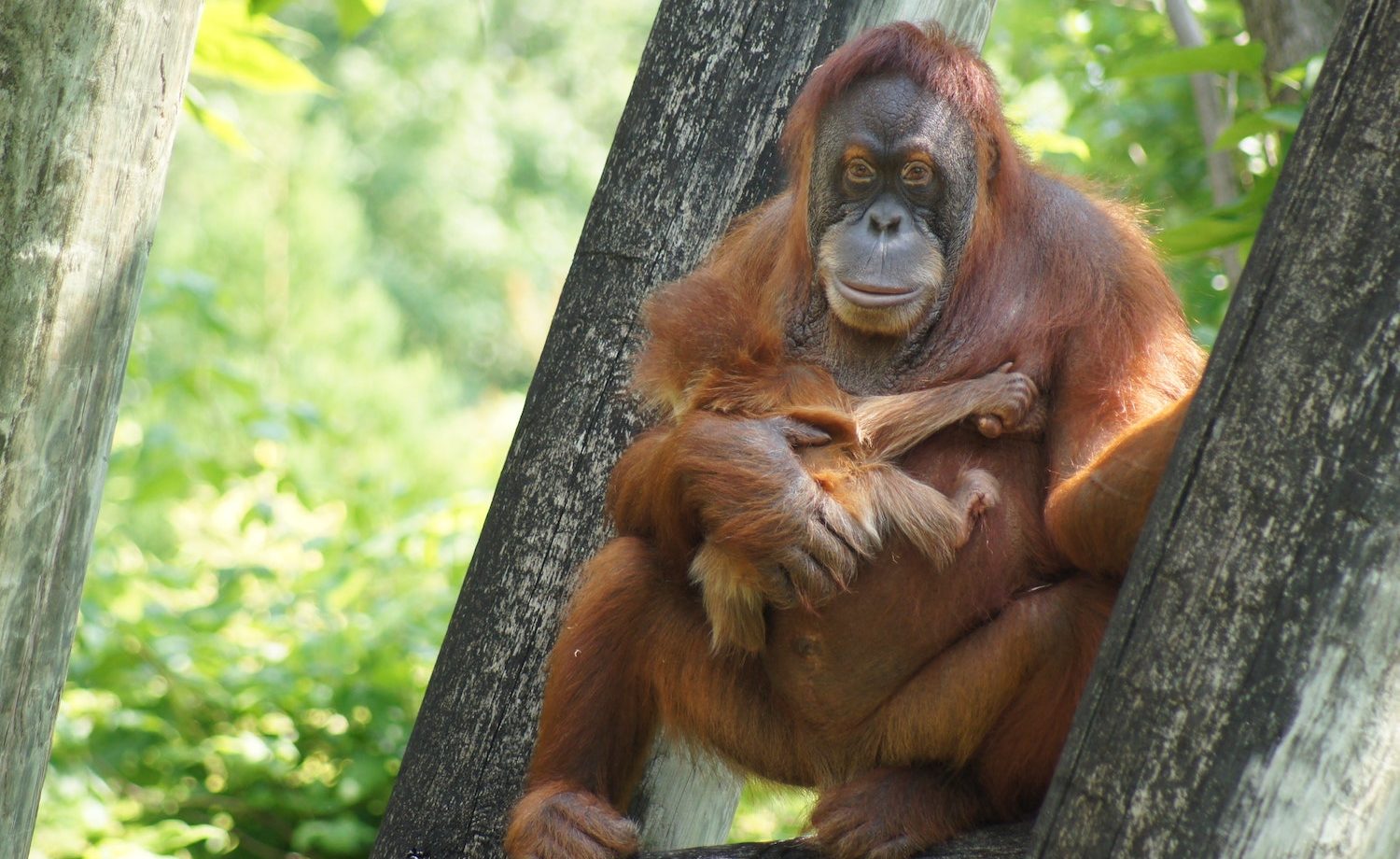
Each absence has a biography behind it. A recent graduate skipping her first feedings is testing her own competence — the wobbliest, most important exams the centre runs. An old hand who hasn't been seen in months has simply moved deeper into the reserve, living the life the whole apparatus exists to restore. And the celebrated case, the one keepers mention with something close to grandparental pride: a female who vanished for years and reappears at the forest edge with a wild-born infant on her hip. She doesn't need the platform. She's showing the baby where the safety net is, the way her keepers once showed her.
That's the diploma with honours, and it's handed out in absentia.
What it means for your visit
Treat platform attendance like weather: shaped by season, never promised, and no reflection on you. Your practical moves are the same three as ever — the nursery (which ignores the fruiting calendar entirely, since the orphans aren't foraging yet), the second session on the same ticket, and the river if orangutans are the whole trip.
And if you do hit the macaques-only morning: you caught the centre succeeding, live. Genuinely. Sixty years of work, visible as an empty stage. The full odds, unvarnished.
Skip-feeding questions
Why don't they just serve better food to attract more orangutans?
Because attraction is the failure mode. A platform that out-competes the forest breeds dependent orangutans who never leave — well-fed, permanently institutionalised, unreleasable. The boring menu is the rehabilitation.
Do the same orangutans come every day?
No — attendance is a shifting cast of recent graduates, semi-regulars, and occasional veterans, each at a different stage of not needing the place anymore.
Has a feeding ever had zero animals at all?
Zero orangutans, yes, in heavy fruiting periods. Zero animals, never — the macaques have perfect attendance.
Is a no-show more likely at 10:00 or 15:00?
The afternoon runs slightly quieter in most months, but both sessions follow the same forest calendar. The bigger lever is season, not hour. The session comparison.