The forest the orangutans go home to
Updated Sept 2026 details verified
The centre is famous. The forest is the point — 4,294 hectares protected since 1931, running from dipterocarp giants down to the mangroves of Sandakan Bay, and the only reason 'release' is a word anyone at Sepilok gets to use.
What it is, and why it came first
The Kabili-Sepilok Forest Reserve was gazetted in 1931 — three decades before anyone needed it for orangutans — protecting 4,294 hectares (43 km²) of lowland forest for forestry research. That accident of timing is the centre's founding luck: rehabilitation is impossible without protected forest to graduate into, and 1964's experiment only worked because 1931 had already answered the hardest question. Every free-living orangutan in the reserve owes its address to foresters who never heard of it.
One reserve, several forests
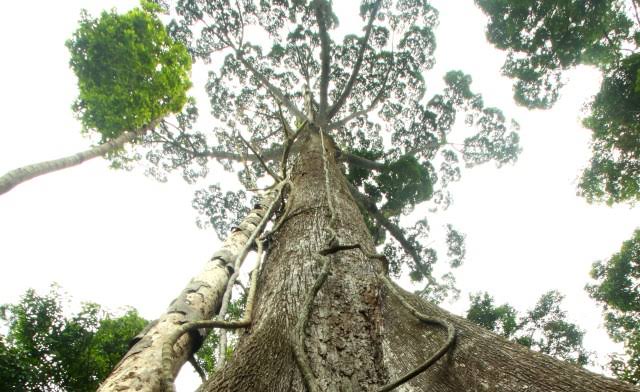
Small on a map, the reserve is layered on the ground: lowland dipterocarp rainforest — the towering, mast-fruiting giants that set the orangutans' calendar — over sandstone hills, easing down through transitional forest to mangroves where the land meets Sandakan Bay. That gradient is why the wildlife list runs from canopy gibbons to mudskippers, and why the RDC's trails and canopy walkway repay slow attention: you can cross several worlds in an afternoon's walking without leaving the boardwalks.
Who lives here
Beyond the 60–80 free-living orangutans: Bornean gibbons owning the dawn, red leaf monkeys in the mid-canopy, both macaques, giant and flying squirrels, and a night shift of lorises, civets and — rarely, gloriously — tarsiers. Overhead, the numbers that earned the reserve its Important Bird Area listing: 300+ recorded species, hornbills to the Bornean bristlehead that birders cross oceans for. The full cast, habit by habit: the other wildlife.
Walking it
Visitors meet the reserve through its edges, by design: the centre's boardwalk, the RDC's trail network and 347-metre canopy walkway, and guided walks including the night shift. Off-trail wandering isn't permitted — the interior belongs to the residents, which is the entire arrangement. Treat the boardwalks as a window, stop often, and the reserve rewards the stationary far beyond the striding.
The honest scale
4,294 hectares sounds vast and isn't — it supports dozens of orangutans, not thousands, a comfortable campus rather than a national ark. That's the sober footnote under everything here: Sepilok can decide individual fates; only the fate of forest elsewhere decides the species. The reserve's deepest job may be as an argument — proof, 43 km² at a time, of what protection buys.
Reserve questions
Can you hike inside the Kabili-Sepilok reserve?
On the established trails and boardwalks — the centre's, the RDC's, and guided walks — yes. Independent off-trail hiking, no; the interior is the residents'.
Is the canopy walkway inside the reserve?
Yes — the RDC's 347-metre walkway rides the reserve's own canopy at 25 metres, hornbill height, a kilometre from the orangutan centre.
Are there really tarsiers at Sepilok?
Western tarsiers haunt the reserve — seen rarely enough that a sighting makes a guide's month. The night walk is your only realistic ticket.