Volunteering at Sepilok, honestly
Updated Sept 2026 details verified
Yes, programmes exist. No, you won't cuddle an orangutan — you'll barely be near one. Here's what volunteering really involves, who thrives at it, how to spot the fake versions, and the uncomfortable maths of when donating helps more.
What legitimate volunteering actually is
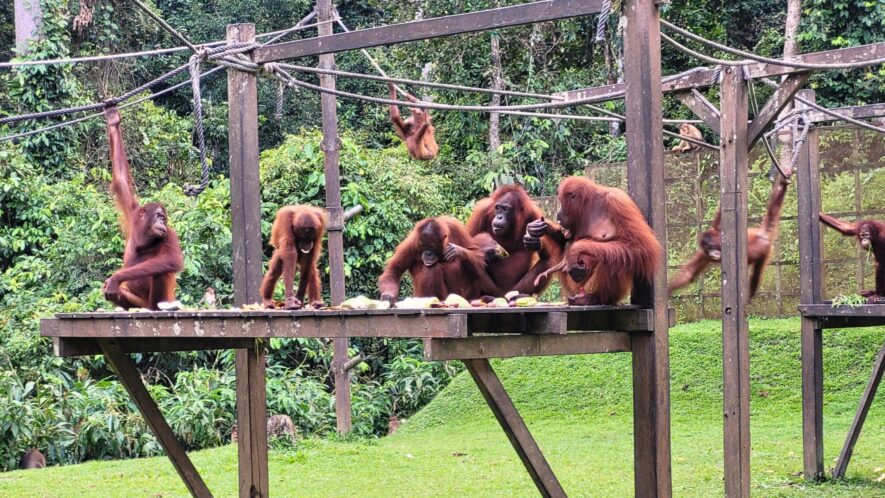
Real placements at and around Sepilok run through established organisations — Orangutan Appeal UK among them — in stints measured in weeks, doing what the centre needs done: building and refreshing enrichment structures, husbandry support, maintenance, education work, the thousand unglamorous tasks that keep a working institution working. You'll be tired, useful, and mostly out of sight of both visitors and orangutans.
The costs are real and by design: programmes are self-funded, and your fee subsidises the centre — you are simultaneously labour and donor. Places are limited, vetted, and worth the patience of the application; the vetting exists because the orphans matter more than the applicants, which is exactly the attitude you want in the people running it.
What it isn't — the sentence that filters everyone
Hands-on ape time. The no-contact rule binds volunteers more strictly than anyone, because volunteers are around longest: you will work for orangutans, rarely near them, never touching them. Read that sentence again if the mental image drawing you here involves a small orange hand in yours — and know that any programme anywhere selling that image is selling the animals' futures. It's the disqualifying test, applied to volunteering.
Who thrives
The pattern is consistent: people with weeks to give, practical skills or the humility to labour without them, and motivations that survive the no-contact sentence above. Builders, teachers, grafters, the quietly obsessed. They return changed, and they're the alumni who fund the work for decades after. If that's you, start the conversation through Appeal UK and expect the process to take time.
The uncomfortable maths
Honesty owed: for most people, the flights, fees and weeks of a short placement convert to more conservation as a straight adoption or donation than as logistics. Volunteering's unique product isn't efficiency — it's depth: the version of helping that changes the helper. Choose it for that, with clear eyes, or choose the other four ways with equally clear ones. Both choices are honourable; only pretending the maths is otherwise isn't.
Volunteering questions
Can you volunteer directly with the orangutans?
No programme anywhere legitimate offers hands-on orangutan work to short-term volunteers — the disease and habituation stakes are too high. Enrichment, construction and support roles are the real menu.
How long are placements?
Weeks, typically — long enough to be net-useful after training. Day or drop-in volunteering isn't a thing at a quarantine-conscious facility.
Do you need qualifications?
Mostly no — willingness and fitness carry general placements; veterinary and specialist roles are separate, rarer, and professionally recruited.
How do I spot a fake volunteering programme?
Contact promised, guarantees made, no vetting, instant acceptance for a fee — each is a flag, together they're a verdict. Legitimate programmes make you wait and promise you work.