The Rehabilitation Centre, as an institution
Updated Sept 2026 details verified
Most visitors meet Sepilok as an experience. This page introduces it as an organisation — who runs it, what stands behind the public boardwalks, who pays for the work, and the strange arithmetic by which it measures success.
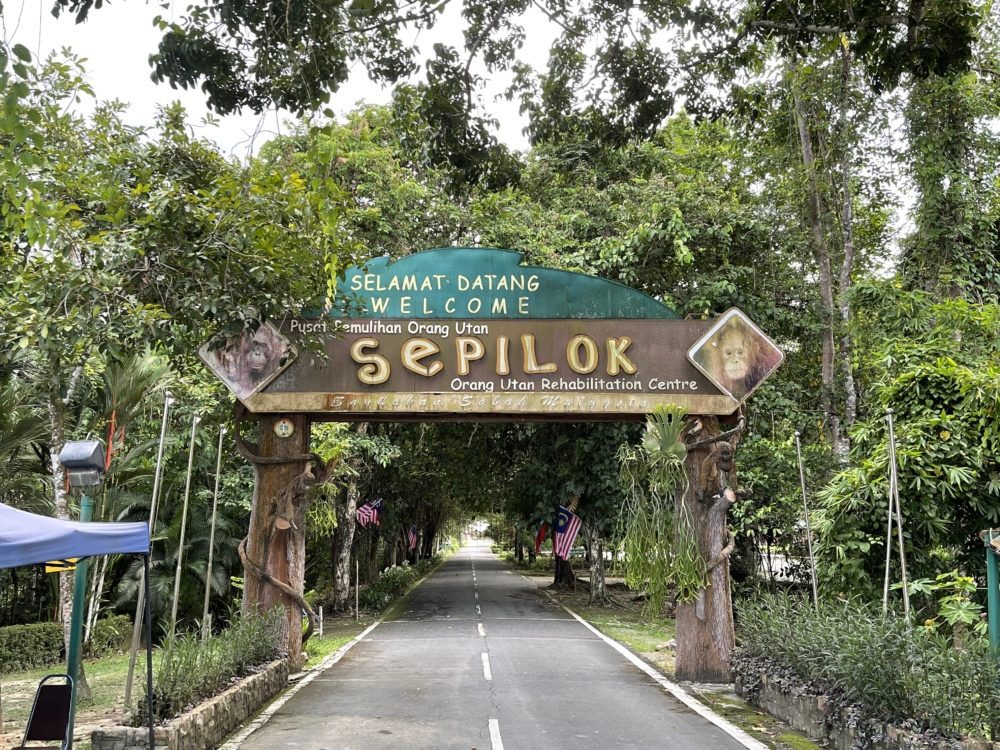
Who runs it
Sepilok is owned and operated by the Sabah Wildlife Department — a state government agency, not a private attraction, not an NGO. That governance shapes everything a visitor experiences: fees set as public policy rather than market pricing (hence RM5 for Malaysians), rules enforced as regulation rather than house style, and an institutional patience — measured in decades — that no commercial operation could sustain.
It opened in 1964 as the world's first official orangutan rehabilitation project and remains the best-known of the handful that exist. The 4,294-hectare Kabili-Sepilok Forest Reserve, protected since 1931 and managed with the Forestry Department, is simultaneously its campus, its classroom and its graduation venue.
The two Sepiloks
The visitor's Sepilok is the front third: ticket counter, education hall and its documentary, the boardwalk, the viewing deck, the nursery windows.
Behind it operates the working institution: the veterinary clinic and treatment ward where arrivals are stabilised and quarantined, the indoor nurseries where the youngest orphans begin, the keeper teams running the buddy system and forest school, and the ranger crews who lay the platform's famous boring meals twice daily. Over the decades this back-of-house has treated more than orangutans — sun bears, gibbons, the occasional elephant — though dedicated facilities now carry most of that load.
Who pays for it
Three streams, braided. Government funding, as befits a state agency. Entrance and camera fees — your RM40 works here. And since 2001, Orangutan Appeal UK, the registered charity that funds and delivers care and rehabilitation work at Sepilok and runs the official adoption scheme — the channel by which someone in Manchester helps pay for milk in Sandakan.
The family it founded
The institution's influence is easiest to see from its own gate: directly opposite stands the Bornean Sun Bear Conservation Centre, founded in 2008 by Wong Siew Te explicitly on Sepilok's model — rescue, rehabilitate, release, and let a paying, educated public fund the work. Forty-plus bears and nearly 80,000 annual visitors later, the road outside Sepilok has become a small district of second chances.
The strange arithmetic of success
Most institutions succeed by growing. This one succeeds by emptying — every metric that matters counts departures. One hundred-plus released across six decades. Sixty to eighty living free in the reserve. Females raising wild-born young who will never need the place at all. A rehabilitation centre is a machine for making itself unnecessary, one orangutan at a time, and Sepilok has been running longer and better than any machine of its kind on Earth.
Which is what you're actually funding at the ticket counter, and what the whole visit is a window onto.
Institution questions
Is Sepilok government-run or private?
Government — the Sabah Wildlife Department owns and operates it. No private company runs the centre, whatever tour branding might imply.
Where does the entrance fee money go?
Into the centre's operations, alongside government funding and Orangutan Appeal UK's support — the fee is a contribution to the work, not a commercial ticket.
Can you visit the clinic or indoor nurseries?
No — quarantine and welfare keep them off-limits to everyone but staff. The nursery windows and platform are the public share, by design.
Is this website affiliated with the centre?
No — we're an independent visitor guide, unaffiliated with the Sabah Wildlife Department. We verify our facts monthly and say so page by page.