Why the nurseries are never empty
Updated Sept 2026 details verified
Every orphan at Sepilok arrived by one of a handful of routes, and the routes haven't closed. This page maps them — including the numbers that are hard to read, and the complication about palm oil that easy answers skip.
The scale, first
Start with the number that reframes everything: a landmark 2018 study estimated Borneo lost on the order of 150,000 orangutans between 1999 and 2015 — roughly half the island's population, in sixteen years, within one human generation. The critically endangered listing isn't precautionary language. It's arithmetic.
Against that backdrop, Sepilok's hundred-plus releases read correctly: heroic at the scale of individuals, and a rounding error at the scale of the species. The centre saves orangutans. Only the forest saves the orangutan.
The routes to the nursery door
Habitat loss — the master threat
Logging and the conversion of lowland forest to plantations — oil palm above all — removed most of the orangutan's original range. The mechanism is brutally simple: a canopy specialist with no plan B, suddenly at ground level in someone's crop. Orphans of clearing operations are Sepilok's steadiest intake, and the reason stage one never lacks students.
Fragmentation — the quiet multiplier
What forest remains is increasingly islands, and an orangutan crossing a plantation between fragments is exposed, slow, and often unwelcome. Isolated populations also stop mixing — a genetic slow puncture that shows up decades later. This is why corridors obsess conservationists: the Lower Kinabatangan's protected riverine strips are exactly such a corridor, which is one more reason that river matters beyond tourism.
Fire
Dry years — the El Niño years especially — bring forest and peatland fires that erase habitat wholesale, with 2015's burning season the modern benchmark for how fast "protected on paper" can become smoke.
The pet trade
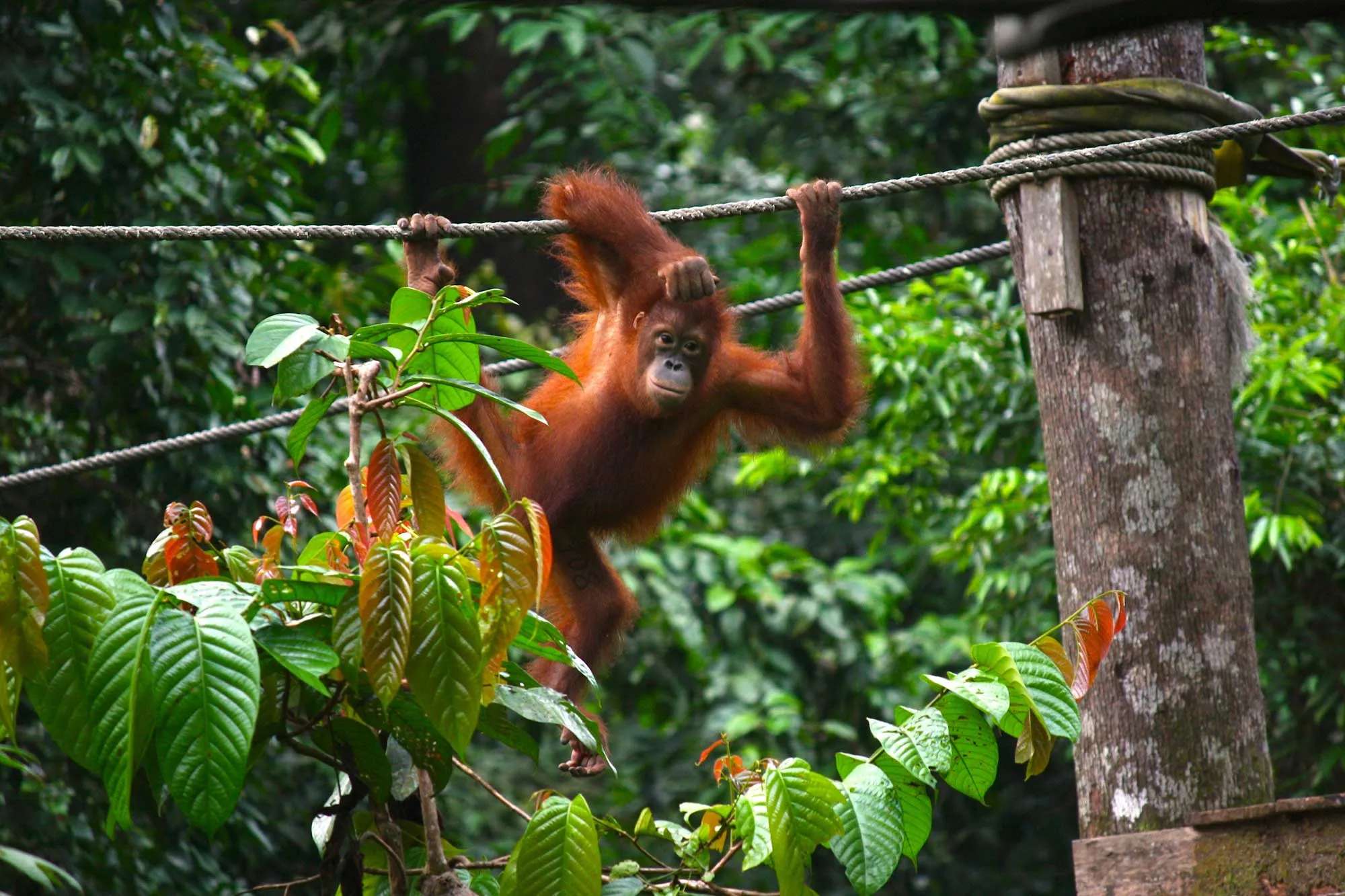
The trade's arithmetic is the cruellest on this page: capturing one saleable infant generally means killing its mother. Confiscated pets — often traumatised, humanised, and unable to climb — arrive at Sepilok needing the longest rehabilitations of all. Every "cute pet orangutan" video you've ever scrolled past sits somewhere on this supply chain.
Conflict and hunting
At the forest edge, an orangutan raiding fruit crops is a pest with a farmer's livelihood in its hands, and killings follow; orphans are collected from the aftermath. Hunting for meat persists in places too. Edge conflict is the threat that grows automatically as fragmentation does — more edge, more contact, more orphans.
The palm oil complication — the part easy answers skip
Here's where honest conservation writing gets uncomfortable. Palm oil funds Malaysian livelihoods at every scale, Sabah's included — and oil palm is the world's most land-efficient oil crop, so blanket boycotts largely shift demand to oils needing more land elsewhere. The workable asks are narrower and less satisfying than a boycott: certified sustainable palm oil (RSPO), no new clearing of high-value forest, and funded corridors stitching the fragments together. Unsatisfying, workable, and what the people doing the work actually ask for.
Which leads to the only question this page exists to set up: what can a visitor actually do? Five real answers, ranked.
Threat questions
How many orangutans are left in the wild?
Estimates vary by species and year; the honest summary is tens of thousands of Borneans, far fewer Sumatrans, a few hundred Tapanuli — all three critically endangered, all three declining. Precision matters less than direction.
Is palm oil the only cause?
The biggest driver of habitat loss, not the only threat — logging, fire, the pet trade and edge conflict all feed the same decline, and the pet trade in particular fills nurseries directly.
Should I boycott palm oil?
The conservation consensus says demand certified sustainable rather than boycott — substitution to hungrier crops helps nobody. Read labels for RSPO; that's the lever a shopper actually holds.
Does visiting Sepilok help or add pressure?
Helps — fees fund the work, and a visible, paying public is the political argument for protection. Visit by the rules and you're part of the case.